Friday, 3 January 2014

2014


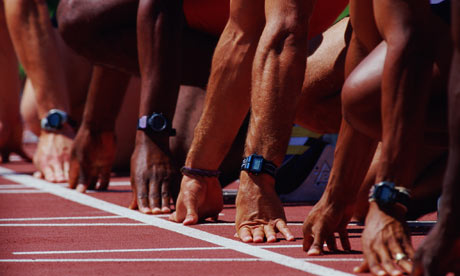
New start and new beginnings, in the spirit of the start of a new year I've written down what I would like to achieve.

New Years Resolution:
  • Learn how to quilt; I will make a quilt from my told University hoddies.

What will happen:
  • Finish the Virgin Media Gradscheme.
  • Finish my role on the EWB-UK National Executive.
  • Move in with my Boyfriend.
  • My sister will get married.
  • I will plan a Hen do for my Sister.

What I would like to Happen:
  • My family will stay fit and healthy for a whole year. 
  • Start working in Sustainability or
  • Start working in Education & International Development.
  • Plan to go on holiday to Canada to see if what I really want to do for a year.
 

Tuesday, 17 December 2013

Tomorrow's Engineers


How do we get Tomorrow's Engineers?


It's a short question with so many answers; I'd be interested to see what other people's thoughts are on this topic. 

I've written a blog around Women in Engineering and then encouraging Tomorrow's Engineers through my experience with Engineers without Borders (EWB-UK) Outreach programme. I currently run the scheme on a National level, however I believe that most impact is made on the ground, going into schools and making a difference; If I am honest I felt I made more of a difference when I was going into schools running Outreach workshops during my time at University.

Today, I have a Masters degree in Engineering, I'm the National Outreach coordinator and I am also on the Engineering Graduate scheme here at Virgin Media. Recently I was lucky enough to be invited to a Women in Engineering roundtable run by UNESCO and the International Gas Union regarding the African and Arab states, to be honest it changed my view on 'Women in Engineering' drastically. Before I went I thought "why the big fuss? Why are we excluding men, when we're trying to include women?" I genuinely could not grasp what the point was - I could understand why we run Outreach in schools and advertise awareness around STEM subjects, but not why we need to push the women aspect. I think part of it was the whole positive discrimination aspect which I have funny feelings about; I'd hate to think that I only got a job because I'm female. But that's not what the push for Women in Engineering is about. 


In the UK we have come on a long way from many of the African and Arab states in terms of cultural and societal acceptance (mainly with thanks to the suffragettes movement which gave women the right to vote) however, we're probably about the same in regards to STEM in education, and women with a STEM education entering the workplace. In fact some of the Arab states beat us with 50-60% of women in Engineering Colleges (University), but less than 5% entering the workforce where as, we have 27% of women studying Engineering at University with less than 6% entering the Engineering workforce.

Engineers can help alleviate poverty; they can engineer a way to deliver clean water to a village so that the villagers don't have to walk miles to collect dirty pond water. Engineers can engineer a way to get energy to a village so they can have electricity at home or in a school or hospital. Engineers can engineer a way to alleviate hunger, by irrigation techniques or even a gravity rope-way to make a journey take 10minutes rather than 5/6 hours [link]. 

The main reason I think we should encourage women & girls to go into engineering specifically is that we can't ignore half the population and hope, they may, one day go into Engineering. In some respects without even thinking we are subtly discouraging half the population from studying STEM subjects with our own preconceived views. Generally speaking, boys from a young age are encouraged to break things, mends thing and get some grazed knees, girls often aren't and are given Barbie dolls to care for - a bit of a sweeping statement since I was given Barbie dolls for Christmases and Birthday's and I am an Engineer now... 

A pretty awesome video by Goldie Blox recently got a lot of press, the company makes engineering toys for girls; I'd recommend a watch.

When we used to run our "What is an Engineer?" workshop I always asked the children what they thought an "Engineer actually is". Unless a child’s Dad or Uncle was an engineer of some sort I usually got the answer "a Mechanic!"... There we have the perfect point to say "Correct! Can you think of any others?!"..... Deathly silence, and so began the workshop. 

I have to admit Telecommunications was not on the list we put together of Engineering professions, as we generally spoke about our degree choices, usually, mechanical, electrical & electronic, civil and general engineering streams plus aeronautical, manufacturing and a few others - even University students need to be made aware of what Virgin Media do!

In November there was a governmental drive to encourage "tomorrow's engineers" it focused on 11-16 year olds, and the organisers asked NGO's and charities who run outreach programmes to encourage the awareness of the Engineering Career directly or indirectly. With just a week of National awareness it gave the following results. The poll was conducted on 11-14 year olds in England and Wales:

  • 4% more parents would encourage their child to consider a careers in engineering - from 34% - 38%
  • There was also 5% rise in the number of children considering a career in engineering from 40% - 45%
  • With a 6% rise in girls who would probably consider a career in engineering from 28% - 34%
  • Polling carried out the week after TE week showed that 26% of 11-14 year olds had heard about engineering careers or Tomorrow's Engineers Week during the past couple of weeks. 
[Erin Harvey, Department for Business, Innovation & Skills]

A pretty impressive result on all accounts; it goes to show that awareness towards engineering is so important to change the perception of what an engineer is and what we do.

So, how should we encourage tomorrow's engineers? Through Outreach? Through awareness? More women engineers on TV? Hope they want to be an Engineer?

Sunday, 15 December 2013

UNESCO/IGU Women in Engineering Conference


UNESCO/IGU Workshop on Women in Engineering

10th December 2013

On the 9th December 2013, I flew out to Paris to attend a “Women in Engineering roundtable for the African and Arab states”. We began the day with 2 minutes of silence for the late Nelson Mandela, who believed in the great power of education, specifically the Science, Technology, Engineering and Maths (STEM) subjects – leading him to set up the Nelson Mandela institute of Science and Technology. 

                There were many inspiring speeches from women and men throughout the day, many of them speaking from their own experience which brought home the message that these issues are real, and they are happening now. Throughout the day I was humbled by the candid way everyone spoke about these issues. It really enabled open and honest conversations from the panel to the audience – which is so important if we want to make good cultural and national changes. 

During the day I heard many shocking statistics, figures and stories being told, for instance, did you know that South Africa needs 2.5 million more engineers to meet the Millennium Development Goals? And that in Tanzania and Zambia there is 1 engineer to every 6,000 people? In the UK we have 1 engineer to every 12 people…

                The reason it is so important to increase the number of engineers throughout the world is because there are 1.1 billion people still without access to clean drinking water, 1 billion People who are hungry and starving, and around 1 billion people without access to electricity.  These are issues that engineers can solve. The reason it is important for women to get into Engineering is that they account for around half of our population (49.65% c. 2011), yet not many women choose to go into STEM careers for a number of reasons: usually due to lack of awareness and education, or societal and culture barriers. It’s unsustainable to discourage half of the population to consider a career in STEM, so there is a drive to actively encourage more women to consider such a career.

The statement which really made me realise how far we have progressed in the UK in terms of technology and engineering, and how far we have moved towards enabling women to move away from traditional roles if they want to is:

“The lack of access to energy is killing people. If water and electricity was available to all, young girls would not spend 20 hours a week collecting firewood and water, as well as doing household chores: they would be at school getting an education or working. Just think about how much the dishwasher and washing machine has done for women in developed countries today.”

Yes, the simple household appliances many of us have has freed up hours of the day for women to pursue their careers or spend more time with their children. Sadly this isn’t the case for the underdeveloped world where many women and girls don’t have the luxury of these appliances and do not have the time to get an education or go to work.

As I am sure you have guessed by now, I could write an essay about all the interesting facts and information I learnt throughout the day, however, for you this would not be very fun, therefore I have created an Infographic poster regarding Women in Engineering. Take a look and see if some of the information comes as a surprise to you… maybe it won’t, but at least you are now more aware about the drive to encourage more women to consider a career in STEM.


Friday, 22 November 2013

UNESCO Youth Forum 2013

UNESCO YOUTH FORUM 2013: EWB Outreach

Article for Virgin Media

From the 29th-31st October 2013, I was invited to the UNESCO Youth Forum to run an Engineers without Borders (EWB) Outreach Workshop.

The best place to start is at the beginning, so first of all: Who are Engineers without Borders? How am I involved in their Outreach Programme? What is the Youth Forum?

Engineers without Borders are an organisation that aims to create “massive small change” – a pretty big mission statement! Essentially, it means that we implement small changes which lead to larger changes. An example would be installing a wind turbine in a remote village in Africa using local resources and training the local community to maintain it (a small change) which then results in the village having both electricity and skilled villagers (a massive change). 

Granted, this is a very simple example, but in essence this is what EWB strives for: empowering new engineers to remove barriers to human development.

EWB in the UK offer many programmes including training, events, international projects as well as Outreach. Outreach is mainly focused on the younger generation: we run interactive workshops which explore global, environment and social challenges. Our main message is to use appropriate technology for the issue at hand. 

I’m currently the Outreach National Coordinator for the UK; I have been in this role for just over a year of a two year position. I started my involvement with EWB whilst at University where I started Outreach at the University of Warwick Branch and in my final year become co-president of the branch. Overall I have been involved with EWB for 5 years (so far!). We have around 23 branches that actively run Outreach and last year they “outreached” over 3,000 students (excluding the science and engineering festivals we attend). 

The partnership between EWB-Outreach and UNESCO started around a year a go and resulted in Outreach being invited to go to the University of Nigeria Nsukka in June where we trained 120 students to start-up and run Outreach with their local community and outreached 2,000 students in 2 days. UNESCO was very happy with our work and we have since been invited to celebrate World Teachers Day in October and subsequently to run a workshop at the UNESCO Youth Forum. 

The purpose of the Youth Forum was to promote change and innovation through young people. The Youth Forum’s main purpose is to build a bridge between UNESCO, its member states, young people and their organisations. It aims to reinforce the competencies of young people to drive change in their communities and active partners in peace building and the promotion of sustainable development.

I was invited along by the Natural Science department to promote the work that Engineers without Borders do in their Outreach Programme. I ran workshop called ‘Going the Distance’ which explores transport and transport infrastructure. It highlights the importance of having good infrastructure to support the transport we use. All participants were given a case-study to build a bridge to help a community. The villagers have to cross a river to get to the local market, school and hospital. During the dry season villages walk over boulders and rocks since the water is low, but in the rainy season the villagers cannot cross the river as the water level rises above the boulders and rocks. The bridge design had specific criteria which had to be met. Unfortunately, the previous sessions overran, so we had to improvise and go through the presentation very quickly and they only had 15 minutes to build a bridge! 

This workshop was very interesting. Usually the workshop is run for students aged between 7-18 years old, but this time the participants were in their late twenties and early thirties. We weren’t aware of the demographic before the session but the workshop was still successful and everyone had a great time rushing to put together their bridges! 


The atmosphere of the 3 days was electric, full of young people wanting to change the world and work together doing so. Every day UNESCO held a 15 minutes of fame session which was probably the most inspiring session of all. 

Two participants stuck out the most for me:

Naadiya Moosajee who is the co-founder and CEO of an organisation called South African Women in Engineering (SAWomEng) which helps to develop the next generation of engineering leaders in South Africa and Kenya. She is also a board member of the International Youth Foundation which works on youth skills development, leadership and entrepreneurship throughout the world. Alongside all of this, she has also just set-up her own fair-trade fashion company and is known as the most influential woman in South Africa. We were in the same workshop session as each other and I watched her present, she is truly a leader and an amazing woman, yet so down to earth, one evening we sat together and watched SIGNMARK, a sign language rapper (SIGNMARK uses sign language, and a co-performer raps or sings the lyrics).

Nick D’Aloisio is a young UK entrepreneur, a computer programmer and developer of the app Summly. He is the youngest person to receive a round of venture capital (at the age of 15), and in March he sold his Summly App to Yahoo for $30million making him the youngest self-made millionaire ever. An amazing achievement for someone so young! He self taught himself these skills, just out of interest and is lucky to have found his passion so young. I hope that the Outreach work I do may one day inspire a great idea in a young person to then do something as inspirational as Nick. 

I had a fantastic time, but then again it would have been difficult not so since I was in Paris and surrounded by such influential and enthusiastic people. UNESCO are still very keen to work with EWB Outreach which is great since it raises our profile and provides us with more inspiration and ideas for workshops. 

During the next few months Outreach will be having a hectic time as we’re releasing a new workshop we’re working with Practical Action called Make the Link: Power for the World: it explores how renewable energy can provide power to rural communities and appreciate how simple designs can provide this solution. The workshop introduces the concept of technology justice and the Millennium Development Goals. We’re also attending the Big Bang Fair in March which is a huge Science and Engineering fair. We will be promoting the Make the Link workshop along with some fun practical activities for participants to take part in such as a rope washer pump and a pedal powered bubble machine. 

For now, it’s back to work on the Engineering Graduate scheme which is providing great training and skills which I have found has helped to improve how I run Outreach although I still have a lot of learning to do! 

What is Outreach? http://www.youtube.com/watch?v=qThcIjuL-Go
Day 1: http://www.youtube.com/watch?v=P_GGFxr8Xvo
Day 2: http://www.youtube.com/watch?v=9VlgHrVu0q8
Day 3: http://www.youtube.com/watch?v=nU6V746dluM

Tuesday, 15 October 2013

THE BEGINNING

The Beginning

This blog will be used to 'blog' about the interesting things which happen in my life, from work to volunteering, family events to holidays.

I hope to mainly focus upon my career so I can see the development route I have taken when I look back.

I am forgetful, maybe this will help me remember things? possibly even hone in on my English/grammar skills.

This is only the beginning.